Grip Strength Over 40 What It Predicts and How to Build It
Apr 14, 2026
by Mike Barbato
Grip Strength Over 40: What It Predicts and How to Build It
You've been telling yourself you'll get back to training after this quarter wraps up. You've said it before. You know that.
Here's something worth knowing in the meantime: how strong your grip is right now is one of the better predictors of how long you're going to live and how well you're going to function in the next decade. That's not fitness marketing. That's what the research shows. And if you're spending 8-10 hours a day at a desk, your grip is probably weaker than it should be and getting weaker every year you don't train it.
What Grip Strength Actually Predicts for Men Over 40
Grip strength is a proxy measurement. What it's measuring is your overall neuromuscular function, how well your nervous system is communicating with your muscles, and how well those muscles can respond under load. Studies published in the British Medical Journal and The Lancet have linked grip strength to all-cause mortality, cardiovascular disease risk, and functional independence in later life.
Translation: the guys who maintain grip strength as they age tend to move better, recover faster, and stay healthier longer. The guys who lose it usually because they stopped loading the body, tend to see that loss show up in other systems too.
If you're in your 40s and you can't do 10 dead hangs from a bar, or you notice your forearms fatigue fast when carrying groceries or luggage, that's data. It's telling you something about what's going on with your overall strength base.
Why Desk Jobs Accelerate the Decline
Sitting 8-10 hours a day doesn't just affect your posture and your back. It reduces the amount of load your hands and forearms are exposed to. Add a commute, a couple of hours of screen time at night, and weekends that don't include anything physical, and you have a body that hasn't been seriously loaded in years.
The body is adaptive. It keeps what it uses and loses what it doesn't. Grip strength is one of the first things to go when training stops — and one of the first things to come back when you start loading again.
This is one of the reasons kettlebell training in Malvern PA is built around ballistic and loaded carry movements. Swings, cleans, presses, and farmer carries all demand grip engagement throughout the entire movement. There's no machine to stabilize for you. You hold the weight, or you don't.
The 3-Movement Minimum That Builds It Back
You don't need a grip-specific program. You need three loaded movements, three times a week, with a weight that challenges you. Here's the floor:
1. The kettlebell swing. Ballistic hip hinge, full-body engagement, grip under load for hundreds of reps over a session. 3 sets of 15-20. This is the non-negotiable.
2. The farmer carry. Pick up something heavy. Walk with it. 3 sets of 40 yards. Simple. Brutal. Direct grip and forearm stimulus. Easy to do with one kettlebell in a hotel hallway if you have to.
3. The dead hang. Find a bar. Hang for as long as you can. Start at 20 seconds. Build to 60. 3 sets. This alone will tell you more about your grip and shoulder health than most assessments.
Three movements. Three days a week. That's the minimum viable structure to start reversing grip strength loss and rebuilding the neuromuscular base that supports everything else.
What Jesse's Four Months Showed
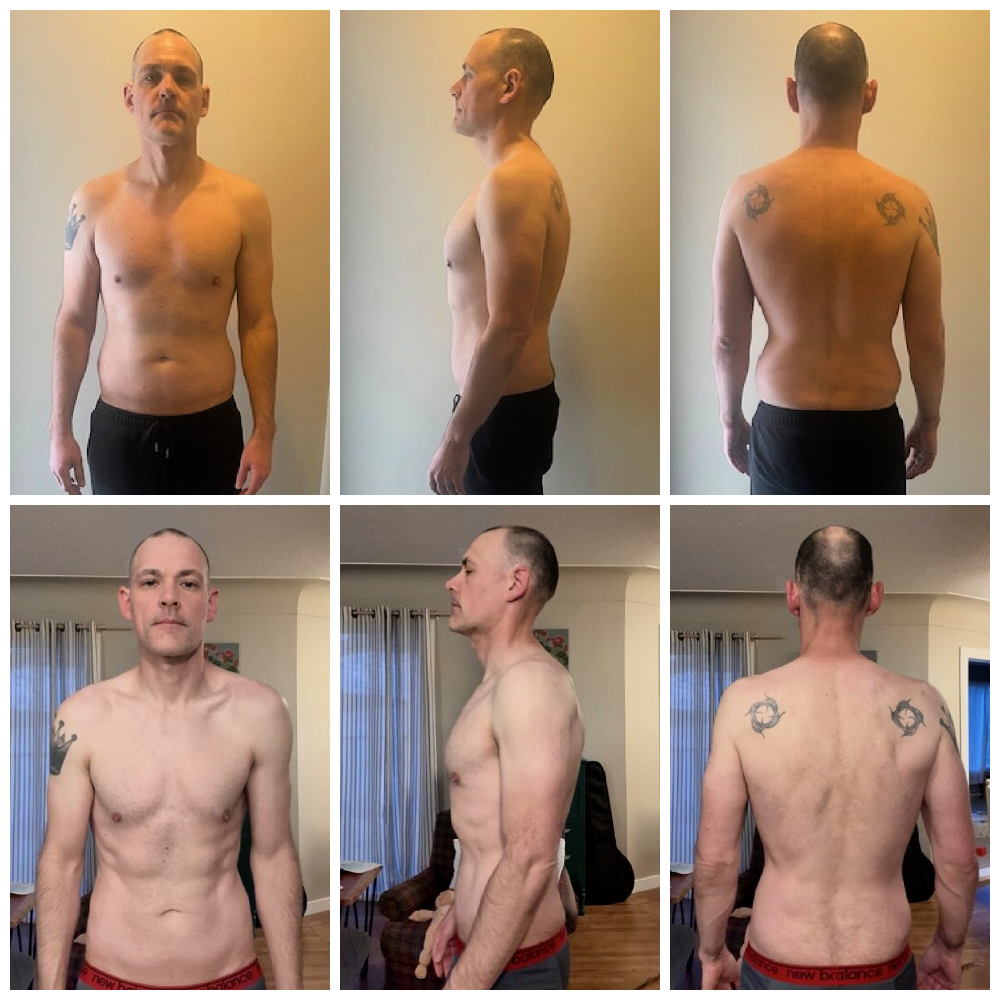
Jesse came in four months ago. New baby, new business, 15 lbs he'd been carrying and putting off. He came in knowing he needed structure he just hadn't found one that held up when life got chaotic.
Four months into consistent kettlebell training, he was handling heavier bells, moving through swings and carries that would have gassed him in the first session, and down 15 lbs in the process. Grip strength was one of the first things he noticed improving, the physical sense that the bell was under control, not fighting him.
He didn't need a gym. He didn't need a perfect week. He needed three sessions, a protein floor, and a calorie ceiling he could actually see.
The framework is straightforward. The calibration: getting the load right, the volume right, the nutrition dialed in for your specific patterns that's where most guys need a coach. You can run this yourself. Most guys do, for about three weeks, before it starts slipping in ways they can't diagnose alone.
If you want to build a plan around your actual schedule, the Jump Start is the local option in Malvern. If you want the 16-week online program built for guys who travel and have unpredictable weeks, KUTS is where that lives.