Kettlebell Training Malvern PA | Why Hard Work Stops Paying Off After 50
Apr 20, 2026
by Mike Barbato
Kettlebell Training Malvern PA: Why Hard Work Stops Paying Off After 50
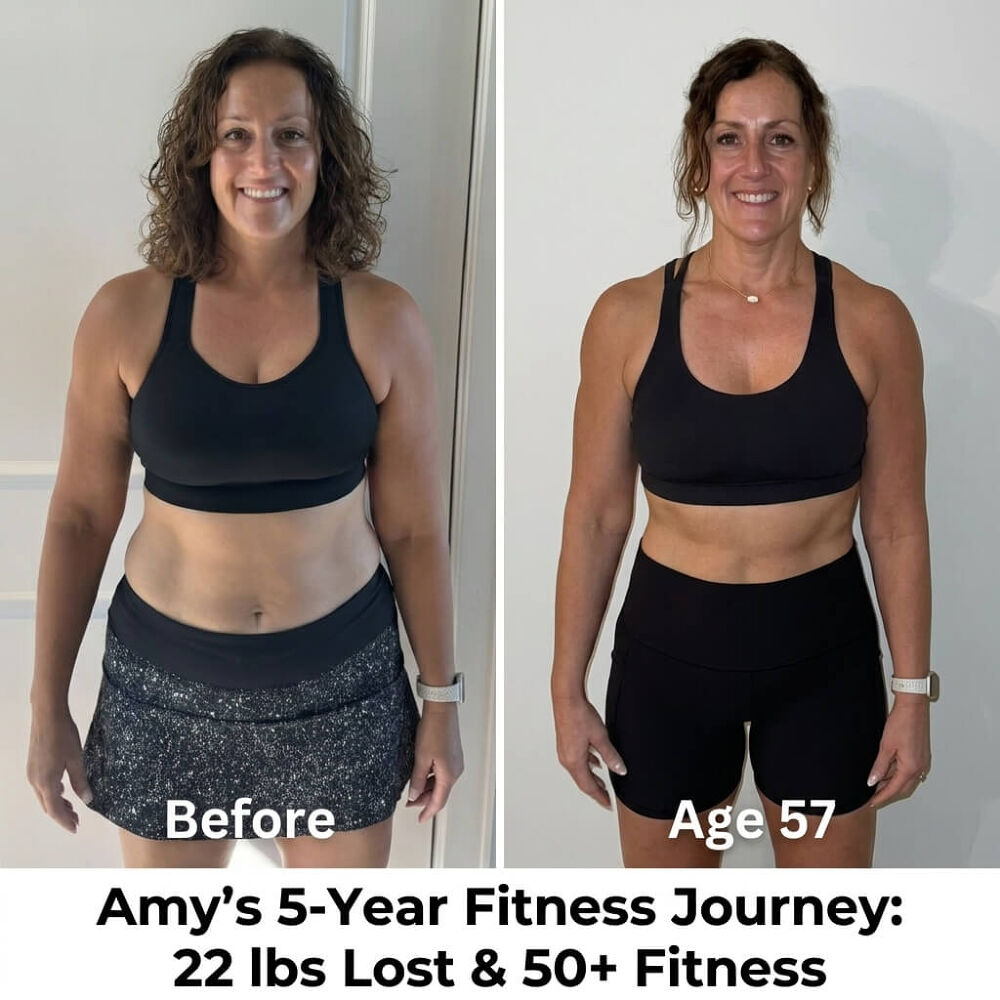
That's the exact situation Amy was in when she enrolled in Kettlebell KUTS with her husband last September. She'd been training with Precision Kettlebells for five years. Showing up. Staying consistent. Never missing sessions. By any measure, she was doing what you're supposed to do.
And in her early 50s, she started to believe that the weight just wasn't going to come off. That maybe hormones or age had changed the math in a way she couldn't work around.
Twenty-two pounds later, she's preparing to run rim to rim to rim in the Grand Canyon this June. What changed wasn't the training. It was the piece next to it.
The Real Reason Training Stops Producing Results After 50
There's a version of this story I see constantly. Someone who trains regularly, eats what they'd describe as "pretty healthy," and still hits a wall at some point in their 40s or 50s where the scale won't budge and the mirror looks the same month after month.
The training side usually isn't the problem. The problem is that the nutrition has never been calibrated to the actual output. Not "eating healthy" in a general sense, but eating the right amounts of the right things for what the body is actually doing.
After 50, especially for women, the margin for error narrows. The body doesn't forgive inconsistent nutrition the same way it did at 35. Guessing doesn't work anymore. The structure has to match the effort.
What We Actually Changed for Amy
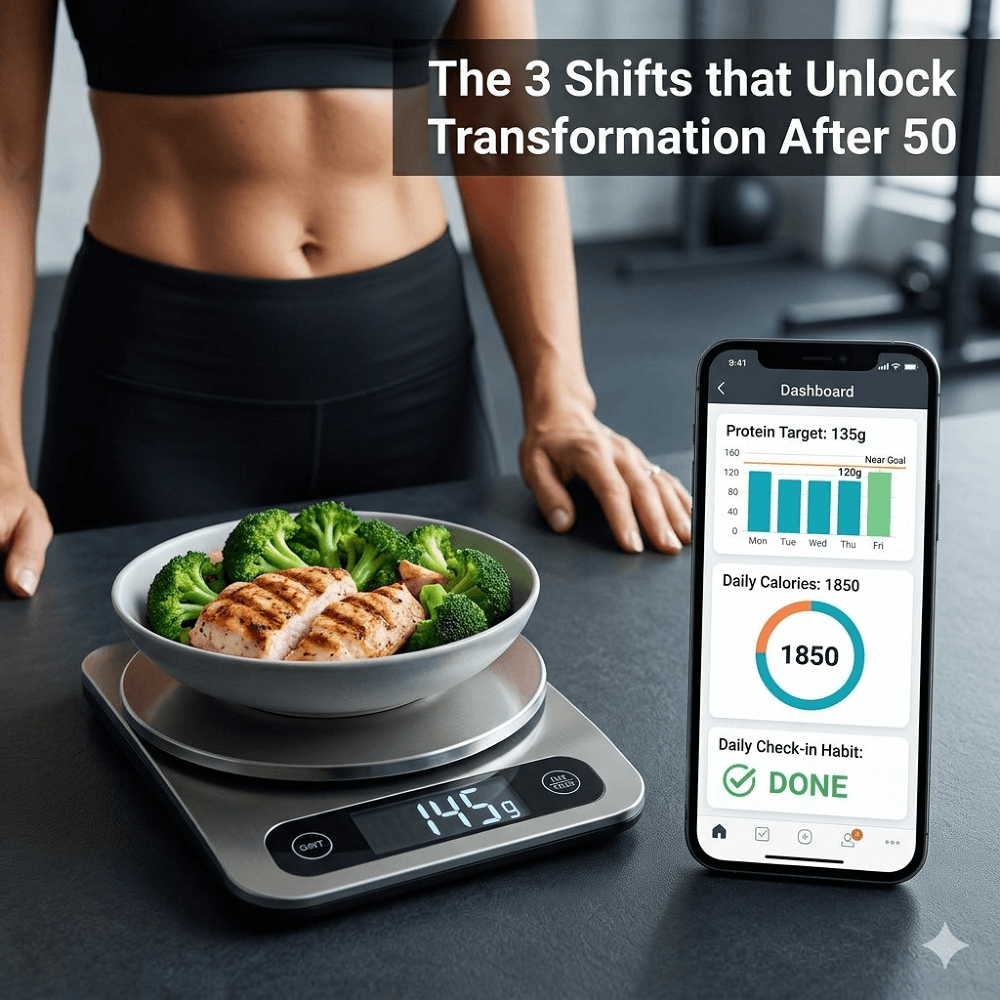
Three things. That's it.
First, we got her macro targets. Not a generic number from the internet. Her specific protein floor and calorie target based on her training output, her size, and her goals. She'd counted macros before but never with the right numbers. That's the difference between doing the work and doing it correctly.
Second, we got her weighing her food. She'd avoided the scale her whole life because she didn't want to see the number. We shifted the frame. The scale isn't a judgment. It's data. When you have the data, you can actually make decisions. When you're guessing, you're just hoping.
Third, we built a daily check-in habit around those two things. Not complicated. Not time-consuming. A simple tracking routine that kept her calibrated instead of drifting. That daily contact with the numbers is what prevents the slow creep that undoes a week of good training.
What You Can Do Starting This Week
Before you change your training, get clear on your protein floor. For most women over 50 who are training regularly, that floor sits between 120g and 140g per day depending on bodyweight. Get that number and track it for one week without changing anything else.
Most people find they're nowhere close. And that gap between where their protein actually is and where it needs to be explains a lot about why the results have stalled.
That's step one. You can do that today with no equipment and no program. Write down everything you eat tomorrow and tally the protein at the end of the day. That's your baseline.
From there, closing the gap is the work. That's where the calibration gets specific to you, your schedule, and how your body is responding. That's the piece an article can't do for you. That's what coaching is.
If you're in Chester County and you want that structure built around what you're already doing, that's exactly what the 21-Day Jump Start is designed to do. Learn more about the Jump Start here.
If you want the online version built around your travel schedule and work week, that's Kettlebell KUTS. Learn more about KUTS here.
Either way, the training and the nutrition have to work together. Amy figured that out after five years. It doesn't have to take that long.