Fat Loss After 40: Why the Scale Lies
Apr 13, 2026
by Mike Barbato
Fat Loss After 40: Why the Scale Lies
You've been consistent. You've been eating better. The scale is down a few pounds. But your pants fit the same, you're still gassed on the stairs, and you can't figure out what's actually going on.
Here's the problem. What you're doing isn't wrong. It's just aimed at the wrong target.
Weight loss and fat loss are not the same thing. And after 40, confusing the two is exactly what keeps guys working hard and spinning their wheels.
Why the Scale Moves But Nothing Else Does
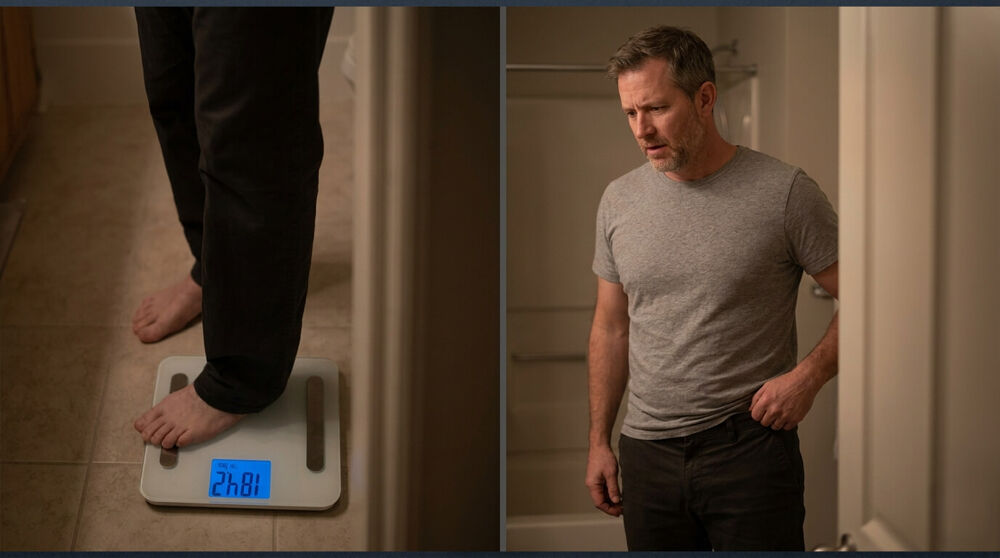
When you slash calories and add cardio, your body drops weight quickly. Water goes first. Then some muscle. Then fat. The number moves fast, which feels like progress. But your body composition, the ratio of fat to muscle, barely changes.
After 40, the muscle loss is the part that matters most. Muscle drives your metabolism. When you lose it, your body burns fewer calories at rest, making the next round of fat loss harder than the last. The guy who goes through three or four "restart cycles" and finds it gets harder every time isn't imagining things. This is why.
Fat loss requires a different structure entirely.
The Protein Floor Every Man Over 40 Needs
The single most important number in this conversation is 160 grams of protein per day. That's the floor, not the target, for a man over 40 who wants to preserve muscle while losing fat.
Most guys eating a "pretty clean" diet are landing somewhere around 90 to 110 grams. That's enough to get by. It's not enough to protect muscle while in a calorie deficit.
The practical standard: build every meal around a protein anchor. Eggs in the morning, grilled protein at lunch, a quality dinner with a high-protein main. On travel days, hit a hotel breakfast for eggs, keep a protein bar in your bag, and make a high-protein choice at the client dinner. You don't need to be perfect. You need to hit the floor.
Quick test: If you're not sure whether you're getting to 160g, track for three days. Be honest about portions. Most guys are surprised by how low they're running.
Why Resistance Training Beats Cardio for Body Composition After 40
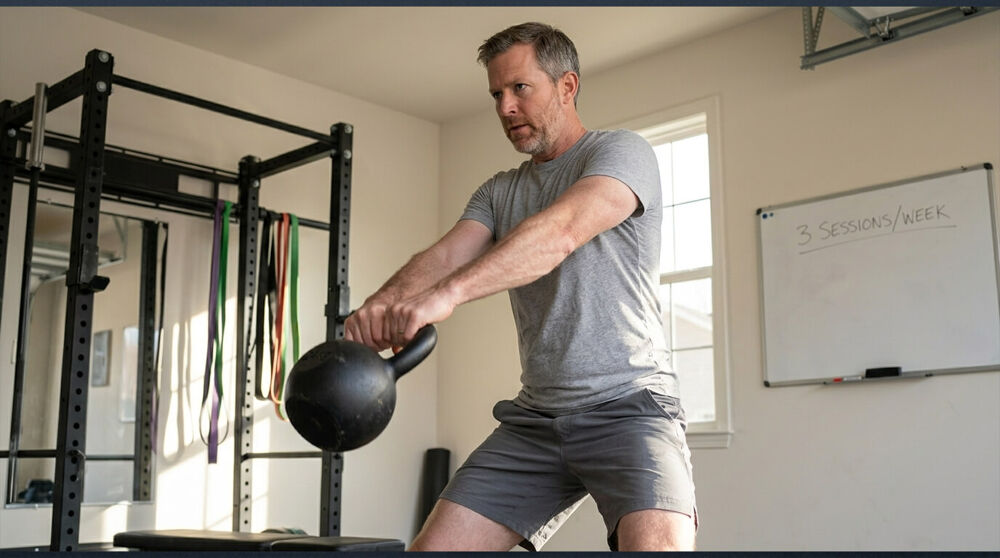
Cardio burns calories during the session. Resistance training builds muscle, which burns calories around the clock.
For guys over 40 with desk jobs and limited training time, resistance work is the higher-leverage choice. The minimum effective dose I've found from years of kettlebell training in Malvern PA with this demographic is three sessions a week, 30 to 45 minutes each.
Kettlebells specifically work well here because a single session covers strength, endurance, and movement quality. You're not choosing between lifting and cardio. You're getting both in 35 minutes. And the program travels. Hotel gym, garage, living room floor. The sessions work anywhere, which matters when your schedule doesn't.
The pass/fail test for your current plan: Can you do your workout with no gym access and 30 minutes available? If the answer is no, what happens every time you travel?
What Progress Actually Looks Like After 40
Stop using the scale as your primary feedback tool. It's useful but incomplete. A better set of markers:
Do your clothes fit differently? Not just lighter, but actually looser in the right places. Is your energy better in the afternoon, specifically the 2 to 4pm window when most desk workers hit a wall? Can you climb a flight of stairs without your heart rate spiking? Are you sleeping better?
Those are body composition markers. When all four are improving, the scale will reflect it eventually. But those four change first.
The structure that drives those changes is the same regardless of whether you're working with me in Malvern or coaching online: 160g protein, three resistance sessions a week, progress judged by function and fit, not just a number.
If you want a plan built around your schedule and not a perfect week, that's what I coach. If you're local to the Main Line, the 21-Day Jump Start is where most guys start. If you're remote or travel heavy, Kettlebell KUTS is the 16-week program built for exactly this. Reply JUMPSTART or KUTS and I'll get you the details.