Kettlebell Workout for Beginners: Where to Start and What to Expect
Apr 2, 2026
by Mike Barbato
Kettlebell Workout for Beginners: Where to Start and What to Expect
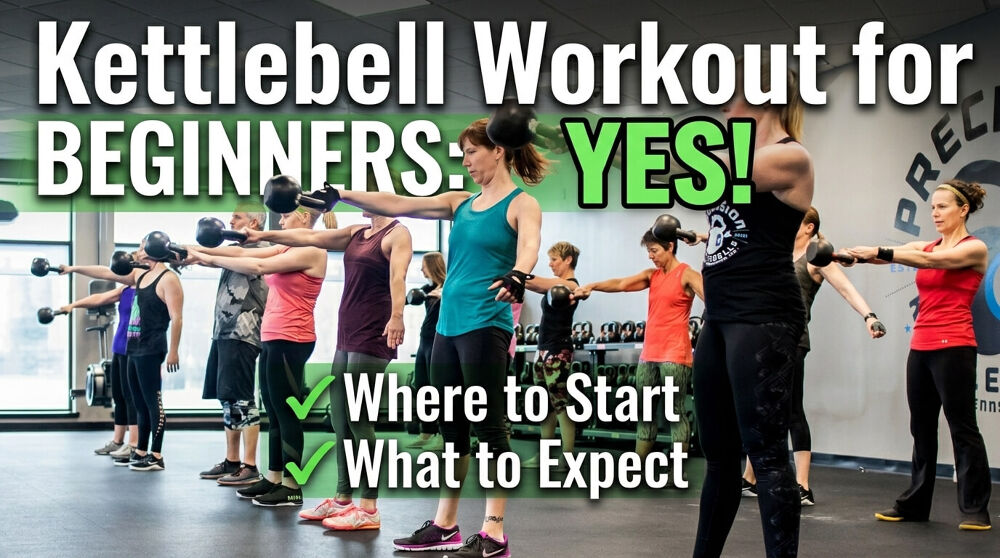
I've been coaching kettlebells since 2008. Before that I was the guy who had no idea what he was doing — picking up whatever weight felt right, following YouTube videos, wondering why nothing was sticking. So when a new client walks in nervous and unsure where to start, I get it. I've been there.
Here's the honest beginner guide I wish someone had handed me — the right weight, the right movements, and a real workout structure you can actually follow.
What Weight Should a Beginner Use
This is where the internet gets it wrong almost every time. Most articles tell beginners to start with 8kg for women and 16kg for men. That's a safe generic answer. It's not always the right one.
Here's how I actually assess it at Precision Kettlebells:
Women
Most women start between 8kg (18 lbs) and 10kg (22 lbs). If you've been active — hiking, group fitness, any regular movement — you might be ready for 10kg from day one. If you've been sedentary for a while, start at 8kg, nail the technique, and progress from there. The goal is a weight that challenges you without breaking your form.
Men
Most men start between 14kg (30 lbs) and 18kg (40 lbs) depending on their strength base. The internet will tell you 16kg is the standard starting point and that's not wrong — but a man with a solid strength background can often go straight to 18kg. A man who hasn't trained in years might need to start at 14kg and build. Ego is not a training variable. Pick the weight that lets you move well.
The rule of thumb: if you can complete a set of 10 swings with perfect form and feel like you could do 5 more, the weight is right. If you're grinding through 6 reps, go lighter. If 10 reps feels like a warmup, go heavier.
The Four Movements Every Beginner Needs to Learn First
Before you follow any program, you need to own these four movements. Everything else in kettlebell training builds on them.
1. The Two-Hand Swing
The foundation of everything. Hip hinge back, drive through the hips, bell floats to chest height, hard stop at the top. This is not a squat. This is not a front raise. It's a hip hinge — your glutes and hamstrings are the engine, not your lower back. Get this right before anything else.
2. The Goblet Squat
Hold the bell by the horns at chest height, squat deep, elbows track inside the knees, chest stays tall. This teaches you to squat properly with a counterbalance. Most people who think they can't squat discover they can once they have a bell in front of them.
3. The Press
Clean the bell to the rack position — bell resting on your forearm, elbow tight to your body — then press straight overhead. Lock out at the top. Lower with control. This builds shoulder strength and stability that carries over to every other movement.
4. The Push Up
Body straight from head to heel, chest touches the floor, full lockout at the top. If you can't do a full push up yet, elevate your hands on a bench or box. Don't do knee push ups — they teach the wrong movement pattern. Scale the height instead.
A Real Beginner Kettlebell Workout
This is the exact structure we use at Precision Kettlebells for beginners. You can run it two ways depending on how you want to train that day.
The Movements
10 Two-Hand Swings, 10 Goblet Squats, 5 Presses Left, 5 Presses Right, 10 Push Ups
Option A — EMOM (Every Minute on the Minute)
Set a timer. Every minute you perform one movement from the list above. Minute 1 is swings. Minute 2 is goblet squats. Minute 3 is left presses. Minute 4 is right presses. Minute 5 is push ups. Whatever time is left in each minute after you finish the reps is your rest. Then the next minute starts and you move to the next movement.
Run 4 to 5 rounds. That's 20 to 25 minutes of real work. The EMOM format keeps intensity honest — you know exactly how long you have and the clock manages your pace.
Option B — AMRAP (As Many Rounds As Possible)
Set a timer for 15 to 20 minutes. Run through all five movements back to back with as little rest as possible. Count your rounds. Each week try to beat your previous round count. The AMRAP format lets you set your own pace — it's more flexible but requires more self-discipline to keep moving.
Both formats work. The EMOM is better for beginners who need structure and a built-in rest. The AMRAP is better once you know the movements and want to push your conditioning.
How Often Should Beginners Train
Three times per week with a rest day between sessions is the sweet spot for beginners. Your body needs time to adapt and recover. More is not better when you're starting out. Consistency over three sessions per week for eight weeks will produce more results than six inconsistent sessions per week for two weeks before you burn out.
The Mistakes Most Beginners Make
Starting too heavy
I know you want to push it. Don't. A weight that breaks your form teaches your body to move wrong. Bad movement patterns are hard to unlearn and they lead to injuries that set you back months. Start lighter than your ego wants and progress from there.
Treating the swing like a squat
The swing is a hip hinge. Your back stays flat, your hips load back, and the power comes from snapping your hips forward — not from squatting down and standing up. If your knees are shooting forward on every rep, you're squatting the swing. Fix that first.
Using the shoulders to lift the bell
The bell should float to chest height on momentum from your hip drive — not because you're pulling it up with your shoulders. If your shoulders are doing the work, your hips aren't loading enough. Focus on the hip snap and let the bell follow.
Skipping rest
Rest is part of the program. In an EMOM, the rest at the end of each minute is built in for a reason. Take it. In an AMRAP, take 10 to 15 seconds between movements if you need it early on. As your conditioning improves, the rest you need will shrink naturally.
Doing too much too soon
Three sessions per week. That's it to start. I've seen people come in fired up and train five days the first week, get wrecked, and disappear for a month. Build the habit first. The intensity comes later.
What to Expect in Your First Four Weeks
Week one you're going to be sore in places you didn't know existed. Your glutes and hamstrings especially. That's normal. It's the hip hinge pattern activating muscles that most people have been underusing for years.
Week two the soreness settles and the movements start to feel more natural. Your hip hinge improves. Your goblet squat gets deeper. You start to feel the swing rather than just thinking through it.
Week three you'll notice your conditioning improving. The EMOMs feel less brutal. You're completing rounds in the AMRAP you couldn't finish before. This is where it starts to get fun.
Week four you're ready to add weight or complexity. Maybe you go from 14kg to 16kg on swings. Maybe you try a single-arm swing for the first time. The foundation is set and you can start building on it.
When You're Ready for the Next Level
The beginner phase doesn't last forever. Once you can move through the four foundational movements with clean technique and the EMOM or AMRAP feels manageable, it's time to progress. That means heavier weights, more complex movements, and a structured program with real progression built in.
That's exactly what Kettlebell Kuts is built for. It takes everything you've learned as a beginner and puts it into a 16-week coached program with weekly check-ins, flexible nutrition coaching, and a real coach adjusting your plan as you progress.
Want to see what's possible when a real program takes over from beginner workouts? Check out real client transformations here.
Ready to stop guessing and start following a real program? Learn more about Kettlebell Kuts here.
Want the complete picture of kettlebell training beyond the beginner stage? Read our Ultimate Guide to Kettlebell Training here.