The Ultimate Guide to Kettlebell Training: Everything You Need to Know to Start, Progress, and Get Real Results
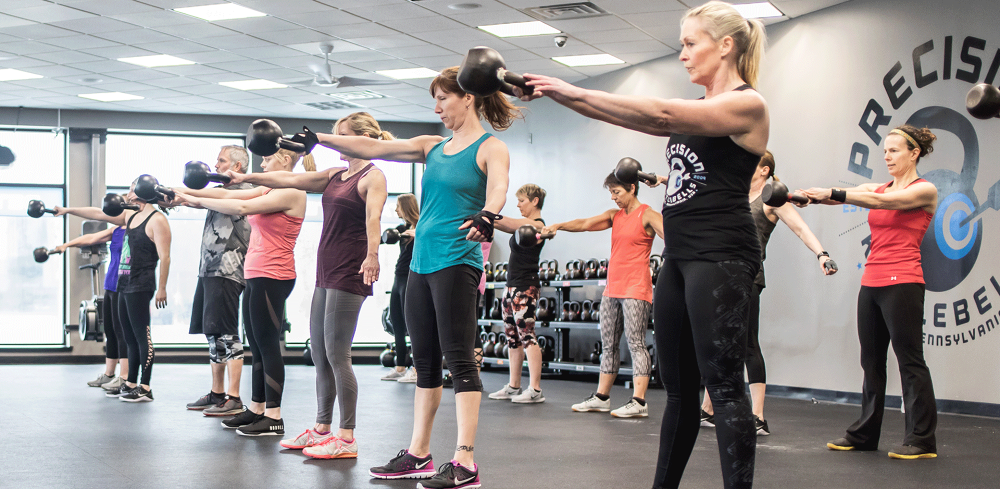
I've been coaching kettlebells since 2008. Before that I was a fat kid who tried everything — cardio machines, diet programs, gym memberships I never used. Nothing worked until I found kettlebell training and finally understood what efficient, purposeful movement felt like.
That experience is why I built Precision Kettlebells in Malvern, PA. And it's why I wrote this guide. Not to sell you something. To give you the honest, complete picture of what kettlebell training is, how it works, and exactly how to get started — whether you train with us or on your own.
This is the guide I wish someone had handed me when I started.
Table of Contents
1. What Is Kettlebell Training
2. Why Kettlebells Work Better Than Traditional Training
3. What Weight Should You Start With
4. The Five Foundational Movements
5. How to Build a Beginner Kettlebell Program
6. Kettlebells for Fat Loss
7. Kettlebells for Strength
8. Nutrition and Kettlebell Training
9. The Most Common Objections — Answered Honestly
10. How to Know When You're Ready to Progress
11. Training With a Coach vs Training Alone
12. Real Results From Real People
1. What Is Kettlebell Training
A kettlebell is a cast iron weight with a handle on top. That offset center of gravity — the weight hanging below the handle instead of sitting in your palm like a dumbbell — is what makes it unique. It forces your body to stabilize, control, and generate power in ways that traditional weights don't demand.
Kettlebell training is a system of movements built around that tool. Swings, cleans, presses, snatches, Turkish get-ups — each movement is a full-body pattern that combines strength, cardio, mobility, and coordination in a single exercise. That's not an accident. It's by design.
The result is a training method that burns more calories, builds more functional strength, and takes less time than most conventional gym programs. Thirty to forty five minutes of focused kettlebell work will out-produce an hour of unfocused machine training almost every time.
2. Why Kettlebells Work Better Than Traditional Training
Most training forces a choice. You either do cardio and burn calories without building muscle, or you lift weights and build muscle without much cardiovascular benefit. Kettlebell training eliminates that tradeoff.
Cardio and Strength in Every Movement
A heavy kettlebell swing drives your heart rate into a cardio training zone while simultaneously loading your glutes, hamstrings, and core under significant force. You're doing both things at once. That's why kettlebell sessions produce faster body composition changes than cardio or strength training alone.
The Afterburn Effect
High intensity kettlebell training creates excess post-exercise oxygen consumption — your metabolism stays elevated for hours after you finish. Studies show this effect can last up to 36 hours after a hard session. Traditional steady state cardio doesn't produce the same effect. You burn calories on the treadmill and then it stops. Kettlebell training keeps working after you put the bell down.
Minimal Equipment, Maximum Results
You need one kettlebell. That's it. You can train in your garage, your living room, a hotel room, or your backyard. There's no gym membership required, no commute, no waiting for machines. The barrier to entry is as low as it gets and the ceiling on results is as high as any training method available.
Joint Friendly by Design
The offset loading of a kettlebell builds core stability and functional strength without the joint stress that comes from heavy barbell work. Clients who come to us with bad knees, shoulder issues, and lower back problems train safely with kettlebells every day. The movements are designed to strengthen the supporting structures around those joints — not grind through them.
3. What Weight Should You Start With
This is where most beginners get bad advice. The internet will tell you to start with 8kg for women and 16kg for men. That's a safe generic answer. It's not always right.
Here's how I actually assess it at Precision Kettlebells:
Women
Most women start between 8kg (18 lbs) and 10kg (22 lbs). If you've been active — any regular movement, hiking, group fitness — you might be ready for 10kg from day one. If you've been sedentary, start at 8kg, learn the movements, and progress from there. The goal is a weight that challenges you without breaking your form.
Men
Most men start between 14kg (30 lbs) and 18kg (40 lbs) depending on their strength base. A man with a solid strength background can often go straight to 18kg. A man who hasn't trained in years might need to start at 14kg and build. The internet says 16kg is standard — that's not wrong, but it's not always right either.
The Real Test
Pick up the bell. Do 10 swings. If you finish and feel like you could do 5 more with clean form — that's your weight. If you're grinding through rep 6 — go lighter. If 10 feels like a warmup — go heavier. Ego is not a training variable.
One thing I tell every new client: comfort is maintenance, not growth. You need to push slightly beyond what feels easy. That's where the adaptation happens. But there's a difference between challenging yourself and hurting yourself. Learn that line early.
4. The Five Foundational Movements
Everything in kettlebell training stems from these five movements. Master these and you can build any program you want. Skip them and you'll plateau fast and risk injury.
The Two-Hand Swing
Everything stems from the swing. It is the foundation of kettlebell training and the movement I come back to with every client regardless of their level. Hip hinge back, load the hamstrings, drive through the hips, and let the bell float to chest height on momentum. This is not a squat. This is not a front raise. It's a hip hinge — your glutes and hamstrings are the engine.
Drive with the hips and use momentum to your advantage. The bell should feel like it's floating, not like you're muscling it up. When the swing clicks — and it will click — you'll feel it in your glutes and hamstrings, not your lower back or shoulders. That's how you know you've got it.
The Goblet Squat
Hold the bell by the horns at chest height. Feet shoulder width, toes slightly out. Squat deep with your chest tall and elbows tracking inside your knees. This teaches the squat pattern with a counterbalance that makes it accessible to almost everyone. Most people who think they can't squat discover they can once they have a bell in front of them.
The Clean
The clean brings the bell from the swing position to the rack — bell resting on your forearm, elbow tight to your body, hand at shoulder height. It's a short, tight arc — not a wide loop. The bell should land softly in the rack, not crash into your forearm. The clean is the gateway movement to pressing and more complex combinations.
The Press
From the rack position, press the bell straight overhead to a locked out position. Bicep by your ear, glutes tight, core braced. Lower with control back to the rack. The press builds shoulder strength and stability that carries over to every other movement. It also teaches you to generate full body tension — a skill that makes everything else safer and stronger.
The Turkish Get-Up
The most underrated movement in kettlebell training. You start on your back holding the bell overhead and stand up — then reverse the whole thing back to the floor. It sounds simple. It's not. The get-up builds shoulder stability, hip mobility, and core strength in a single slow deliberate movement. It also exposes every weakness in your body, which is exactly why it's so valuable.
5. How to Build a Beginner Kettlebell Program
Here's the structure we use at Precision Kettlebells for beginners. Simple, effective, and built around real programming principles — not random exercises strung together.
The Movement Sequence
10 Two-Hand Swings, 10 Goblet Squats, 5 Presses Left, 5 Presses Right, 10 Push Ups
Option A — EMOM (Every Minute on the Minute)
Set a timer. Each minute you perform one movement from the sequence above. Whatever time is left after you finish the reps is your rest. The next minute starts and you move to the next movement. Run 4 to 5 rounds for a complete 20 to 25 minute session. The EMOM manages your intensity automatically — the clock tells you when to go and the rest is built in.
Option B — AMRAP (As Many Rounds As Possible)
Set a timer for 15 to 20 minutes. Run through all five movements back to back with as little rest as possible. Count your rounds. Beat that number next session. The AMRAP is more flexible but requires more self-discipline. Once you know the movements it's a better gauge of your conditioning progress.
Frequency
Three sessions per week with rest days between. Monday, Wednesday, Friday is the classic structure. Your body needs time to adapt and recover — especially in the first four weeks. Consistency over three sessions per week beats sporadic training six days a week every time.
Progression
Every two to three weeks add weight, reps, or complexity. If you're breezing through the EMOM, add a round. If the AMRAP feels easy, go heavier. If you've owned the two-hand swing, try a single-arm swing. Progress is not optional — it's the mechanism that drives results.
6. Kettlebells for Fat Loss
Kettlebell training is one of the most effective fat loss tools available. Not because of any magic — because of physics and physiology.
Large muscle groups working under load at high intensity burns a lot of calories. The hip hinge pattern of the swing activates your glutes and hamstrings — the biggest muscles in your body. When you add the cardiovascular demand of repeated explosive reps, you create a metabolic environment that traditional cardio simply can't match.
Add the afterburn effect — up to 36 hours of elevated metabolism after a hard session — and you're burning fat long after the workout is over. That's the compounding advantage of kettlebell training for fat loss.
But training is only half of it. The clients who drop 30, 40, and 45 pounds are the ones who get their nutrition dialed in alongside their training. Not crash dieting. Not cutting out everything they enjoy. A flexible approach built around real macro targets that supports fat loss without making life miserable. We call it Food Freedom — you keep the foods you love and still hit your goals.
Want to see what real kettlebell fat loss looks like? Check out before and after transformations from real Precision Kettlebells clients here.
7. Kettlebells for Strength
Kettlebell training builds real, functional strength — the kind that carries over to everyday life, not just gym numbers. Pressing a kettlebell overhead requires shoulder stability and core tension that a machine press never demands. A heavy swing builds posterior chain strength that transfers directly to athletic performance and injury prevention.
As you progress beyond the beginner movements, double kettlebell work — two bells, double the load — produces serious strength gains. Double cleans, double presses, double front squats. These are advanced movements that require a solid foundation, but they represent a level of strength development that most conventional gym programs can't match.
The key to building strength with kettlebells is the same as any strength training — progressive overload. Heavier bells over time. More complex movements. More volume. The tool doesn't matter as much as the principle. Apply progressive overload consistently and strength follows.
8. Nutrition and Kettlebell Training
You cannot out-train a bad diet. I've seen people train consistently for months and get mediocre results because their nutrition was working against them. Training and nutrition are two sides of the same equation. You need both working together.
Here's what we've found works best for busy adults over 35:
Protein First
Hit your protein target every day. For most adults that's around 0.7 to 1 gram per pound of bodyweight. Protein preserves muscle while you lose fat, keeps you full, and supports recovery. It's the non-negotiable macro.
Don't Slash Calories
Aggressive caloric restriction slows your metabolism and causes muscle loss. A moderate deficit — 300 to 500 calories below maintenance — produces steady fat loss without destroying your energy or your muscle. Slow and sustainable beats fast and miserable every time.
Keep the Foods You Love
The diet that works is the one you can actually follow. If you love pizza Friday and wine night, build them into your plan. Hitting your macro targets 80 to 90 percent of the time while enjoying the foods you love consistently beats a perfect diet you abandon in three weeks.
Weekly Adjustments
Your nutrition plan should evolve as your body changes. What works in week one won't be optimal by week eight. That's why weekly check-ins with a coach who can see your data and adjust your targets matters — your plan should adapt to your progress, not stay static while your body changes around it.
9. The Most Common Objections — Answered Honestly
I've heard every reason not to start. Here are the most common ones and the honest answers.
"I'm too out of shape to start"
This is backwards. You're not too out of shape to start — you're out of shape because you haven't started. We scale every workout to where you are right now, not where you think you should be. Every person in our studio started somewhere. Most of them said the same thing on their first call.
"I don't want to hurt my back"
The kettlebell swing, done correctly, strengthens your back — it doesn't destroy it. The hip hinge pattern builds the posterior chain muscles that support your spine. We've had clients come to us with chronic back pain who found more relief through proper kettlebell training than through years of physical therapy. Technique first. Always.
"It looks too intense — I won't be able to keep up"
Every movement is scalable. Lighter weight, fewer reps, more rest. You work at your level, not someone else's. The person next to you in class might be swinging a 24kg bell. You might be starting at 12kg. Both are right. The intensity comes from the effort you put in relative to where you are — not from matching someone else's numbers.
"I'm too old"
The majority of our clients are over 35. Many are over 50. Kettlebell training is joint-friendly, scalable, and specifically suited to adults who want to build functional strength and lose fat without the wear and tear of high-impact training. Age is not a disqualifier. Inactivity is.
"It looks scary"
It looks that way until you try it. The movements are taught progressively — you don't walk in on day one and start snatching heavy bells overhead. You learn the hinge. Then the swing. Then you build from there. Nobody gets thrown into the deep end. That's not how we coach.
"It's too expensive"
Compared to what? A gym membership you don't use? Three programs you bought and never finished? One program that works costs less than five that don't. And if you're comparing coached kettlebell training to a big box gym membership — you're not comparing the same product. You're comparing coaching to access. Those are different things with different outcomes.
10. How to Know When You're Ready to Progress
Beginners often make one of two mistakes — they stay comfortable too long, or they push too hard too fast. Here's how to know which direction to move.
It's not about moving fast — it's about being efficient. When your movement is efficient, adding weight or complexity is the natural next step. When it's not, more intensity just amplifies bad patterns.
You're ready to progress when:
You can complete the full beginner EMOM or AMRAP without breaking form on any rep. Your current weight feels challenging but not maximal — you have 2 to 3 good reps left in the tank at the end of each set. You've been training consistently for at least four weeks at your current level. Your coach tells you you're ready — and if you're training alone, that's another argument for having a coach.
You're not ready to progress when:
Your form breaks down before the set is over. You're still learning the movement pattern. You're sore every single session without recovery between. You're chasing numbers instead of quality.
11. Training With a Coach vs Training Alone
You can get results training alone with a kettlebell. People do it every day. But there's a ceiling on what you'll achieve without someone watching your movement, adjusting your plan, and holding you accountable when life gets in the way.
Here's what a coach does that a YouTube video can't:
A coach sees what you can't see. Your hip hinge might feel right and look completely wrong. A coach catches that in the first session and fixes it before it becomes a habit or an injury. A program adjusts to your progress. Your coach sees that you've plateaued and changes the stimulus before you spend three months spinning your wheels. Accountability changes behavior. When someone is watching your progress week over week, you show up differently. That's not a motivational speech — it's behavioral science.
If you're local to Malvern, PA you can train with us in the studio. If you're anywhere else in the world, Kettlebell Kuts is our 16-week online coaching program — real coach, weekly check-ins, flexible nutrition, and workouts you can do anywhere with one kettlebell.
Want to know what coaching costs? Read our honest breakdown of kettlebell transformation program pricing here.
12. Real Results From Real People
Pat lost over 40 pounds. Rick lost 45. Nathan dropped 30. Joe lost 20. Jen lost 14 pounds and two dress sizes without giving up wine night. These aren't outliers. They're what happens when busy adults over 35 follow a real coached program with nutrition accountability built in.
None of them had perfect schedules. None of them gave up the foods they loved. All of them followed the process, submitted their weekly check-ins, and trusted the coaching.
That's the whole formula.
Want to see every transformation? See real before and after results from Precision Kettlebells clients here.
Ready to Start
If you've read this far you're serious about making a change. Here's what to do next depending on where you are.
Local to Malvern, PA
Book a free Discovery Session at our studio on 309 Lancaster Ave. Fifteen minutes with a coach, a tour of the space, and a clear plan for your first 30 days. No commitment required to show up.
Serving Malvern, Paoli, Exton, Berwyn, Frazer, and West Chester.
Not Local
Apply for Kettlebell Kuts — our 16-week online kettlebell coaching program. Real coach, weekly check-ins, flexible nutrition, workouts you can do anywhere with one kettlebell.
Not sure if you're ready for a full program? Start with our beginner kettlebell workout guide here.
Want to understand what the program costs before you apply? Read our honest pricing breakdown here.